
Black Pepper Growing Guide Part 7
Introduction
Black pepper, scientifically known as Piper nigrum, is often referred to as the “king of spices.” It is celebrated not only for its culinary versatility but also for its rich aroma and complex flavor profile. This guide aims to provide an in-depth look at the various aspects of growing black pepper, including its history, production methods, quality grading, and much more. By understanding these elements, growers and enthusiasts can appreciate the intricacies involved in cultivating this globally cherished spice.
What Is Growing?
Growing, in the context of agriculture and horticulture, refers to the cultivation and nurturing of plants to achieve optimal yield. For black pepper, this encompasses several stages: preparing the soil, planting the seeds or cuttings, managing the plant’s growth, and eventually harvesting the berries. Each phase requires specific knowledge and practices to ensure that the plant thrives and produces high-quality peppercorns.
History and Origins
Black pepper has a storied history that dates back over 4,000 years. It is believed to have originated in the Malabar Coast of India, where it was used not only as a spice but also as a preservative and a form of currency. The spice gained immense popularity in ancient trade routes, leading to its introduction in Europe, where it quickly became a prized commodity.
Historically, black pepper was so valuable that it was often referred to as “black gold.” It played a significant role in the spice trade, influencing global trade routes and even prompting exploration during the Age of Discovery. Today, India remains a leading producer, but black pepper is also cultivated across tropical regions worldwide, including Vietnam, Indonesia, and Brazil.
Production and Processing
Growing black pepper involves several steps, from planting to harvesting.
Planting
Black pepper is typically propagated through cuttings rather than seeds, as this method allows for more consistent quality. The cuttings should be taken from healthy, mature plants and planted in well-draining, nutrient-rich soil. The optimal planting time is during the monsoon season, which provides adequate moisture for root establishment.
Growth Conditions
Black pepper thrives in tropical climates with temperatures ranging from 20°C to 30°C (68°F to 86°F). It requires partial shade and high humidity levels, ideally between 60% and 80%. In addition, the plant needs a support structure, such as a trellis or tree, as it is a climbing vine.
Harvesting
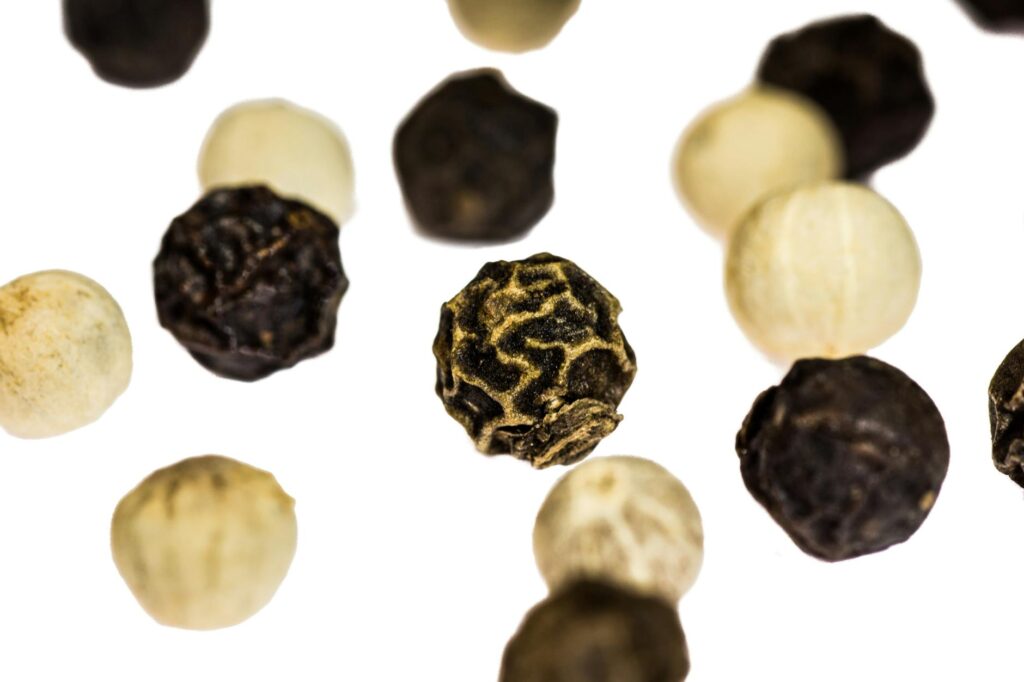
The harvesting process typically occurs when the berries turn from green to red. This usually happens about 6-8 months after flowering. The berries are handpicked and then steamed or blanched to halt the ripening process. Following this, they are dried in the sun or in mechanical dryers, which leads to the characteristic black color and shriveled appearance of the peppercorns.
Quality and Grading
The quality of black pepper is determined by several factors, including size, color, and overall appearance. The grading system varies by country, but generally, it can be categorized into three main grades:
- Special Grade: These are the highest quality peppercorns, known for their size, aroma, and flavor. They are often used by gourmet chefs and high-end restaurants.
- Fancy Grade: Slightly smaller than Special Grade, these peppercorns still maintain good quality and are suitable for most culinary uses.
- Standard Grade: These peppercorns may have blemishes or be of irregular size, making them more affordable but less desirable for high-end applications.
- Origin: The region where the pepper is grown can significantly affect its flavor profile. Indian pepper tends to have a strong, pungent flavor, while Vietnamese pepper is often noted for its heat.
- Form: Black pepper can be found in whole, cracked, or ground forms. Whole peppercorns are generally considered to have the most robust flavor and aroma.
- Freshness: Always check the packaging date and look for whole peppercorns. Ground pepper loses its flavor quickly and should be used within a few months of opening.
- Certifications: Organic certification may be important for some consumers. Look for products that have been certified organic if this is a priority for you.
- Seasoning: It is commonly used to season meats, vegetables, and soups, enhancing flavor and providing a mild heat.
- Preservation: Due to its antimicrobial properties, black pepper has historically been used in preservation methods.
- Aromatherapy: The essential oil extracted from black pepper is used in aromatherapy for its warming and invigorating properties.
- Cosmetics: Some cosmetic formulations incorporate black pepper for its stimulating effects on circulation.
- Store whole peppercorns in a cool, dark place in an airtight container. This helps to preserve their essential oils and flavors.
- Ground black pepper should also be kept in an airtight container, but it is best consumed within 3-6 months for optimal freshness.
- All Black Pepper is the Same: Not all black
Quality assessments often include checking for moisture content, which should ideally be around 12-13% for optimal shelf life and flavor retention.
Buying Considerations
When purchasing black pepper, several factors should be taken into account:
Uses and Applications
Black pepper is an incredibly versatile spice used in myriad culinary applications.
Culinary Uses
Non-Culinary Uses
Storage and Shelf Life
Proper storage is crucial to maintaining the quality of black pepper.
Storage Conditions
Shelf Life
When stored correctly, whole black peppercorns can last for several years, while ground pepper typically has a shelf life of about 1-2 years. Regularly checking for signs of fading aroma or flavor can help ensure that you are using quality pepper.
Common Misconceptions
Despite its widespread use, several misconceptions about black pepper persist: