
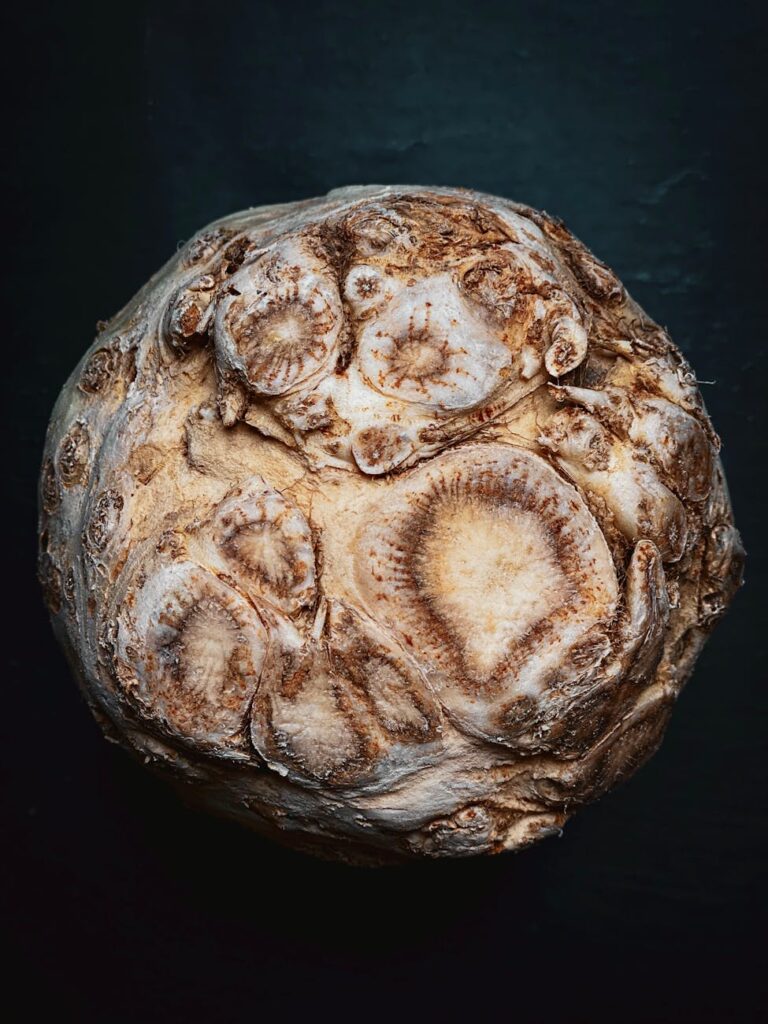
Celeriac About Guide Part 6
Introduction
Celeriac, also known as celery root or knob celery, is an underappreciated but versatile vegetable that has found its place in modern culinary practices. Often overshadowed by its leafy counterpart, celeriac is a root vegetable belonging to the Apiaceae family, which also includes carrots, parsley, and dill. This guide aims to delve into the myriad aspects of celeriac, exploring its origins, cultivation, uses, and more, providing a comprehensive understanding of this unique ingredient.
What Is Celeriac?
Celeriac (Apium graveolens var. rapaceum) is a cultivar of celery cultivated for its edible root. The root is bulbous and knobby, typically ranging from 4 to 6 inches in diameter, with a rough, brownish exterior that can be misleadingly unattractive. However, beneath the surface lies a creamy white flesh that is both aromatic and flavorful. Celeriac has a distinct mild celery taste, less intense than its green stalk cousin, making it a versatile ingredient in a variety of culinary applications.
History and Origins
The history of celeriac can be traced back to the Mediterranean region, where wild celery has been consumed since antiquity. Ancient Egyptians, Greeks, and Romans utilized various forms of celery, primarily for medicinal purposes and as a food source. The cultivation of celeriac as a distinct variety began in Europe during the 17th century, particularly in France and Italy, where it gained popularity.
The name “celeriac” is derived from the French word céleri-rave, reflecting its French origins. Over time, celeriac spread across Europe and eventually to North America, where it is now cultivated in various regions. Its adaptability to different climates has contributed to its global presence, though it remains less common in some parts of the world.
Production and Processing
Celeriac is typically grown in temperate climates, thriving in well-drained, loamy soils with ample moisture. The growing season for celeriac is relatively long, requiring about 100 to 120 days from sowing to harvest. Farmers often start seeds indoors to extend the growing season before transplanting them outdoors.
Harvesting celeriac involves carefully uprooting the bulbous roots to avoid damage. Post-harvest, the roots are cleaned and trimmed, with the tops removed to enhance storage capabilities. Celeriac can be washed thoroughly, packaged, and shipped for distribution in fresh markets.
In addition to fresh consumption, celeriac is also processed into various forms, including purees, soups, and even chips. The versatility of celeriac allows it to be utilized in diverse culinary applications, making it a popular ingredient in both home kitchens and professional settings.
Quality and Grading
When assessing the quality of celeriac, several factors come into play. Freshness is paramount; the root should feel firm and heavy for its size, with no soft spots or signs of decay. The skin should be intact and free from blemishes or excessive wrinkling.
Grading celeriac often involves categorizing it based on size, appearance, and overall quality. Higher-grade celeriac tends to be uniform in size and shape, with a smooth surface and minimal imperfections. Lower grades may have more irregularities or blemishes, but they can still be suitable for cooking and processing.
In commercial markets, celeriac is often sold in bulk or pre-packaged, and buyers should look for reliable suppliers who prioritize quality and freshness.
Buying Considerations
When purchasing celeriac, several considerations can enhance the selection process:
1. Freshness: Look for roots that are firm and heavy, indicating that they are fresh. Avoid those that feel hollow or lightweight.
2. Appearance: Choose celeriac with minimal blemishes or cuts. While the exterior may appear rough, the flesh should be intact and unblemished.
3. Size: Depending on the intended use, opt for celeriac of a suitable size. Smaller roots may be tenderer, while larger ones can provide more flesh for cooking.
4. Storage: If possible, inquire about how the celeriac has been stored and handled. Proper storage conditions can significantly impact quality.
5. Organic vs. Conventional: Depending on personal preference, consider whether to choose organic celeriac, which may be grown without synthetic pesticides or fertilizers.
6. Seasonality: Celeriac is typically in season from late fall through early spring. Purchasing during peak season can ensure better flavor and freshness.
Uses and Applications
Celeriac is a versatile ingredient that can be used in a myriad of culinary applications. Its unique flavor profile lends itself well to both raw and cooked preparations.
Culinary Uses
1. Soups and Purees: Celeriac is often pureed into smooth soups, providing a creamy texture. Its subtle flavor pairs well with other root vegetables and can serve as a base for hearty winter soups.
2. Salads: When grated or julienned, celeriac can add a crunchy element to salads. It can be combined with apples, nuts, or citrus for a refreshing contrast.
3. Roasting: Roasted celeriac develops a caramelized exterior while maintaining a tender interior, making it a delightful addition to vegetable medleys.
4. Mash: Celeriac can be mashed similarly to potatoes, offering a lower-carb alternative while maintaining a creamy consistency.
5. Pickling: Celeriac can be pickled, adding a tangy component to charcuterie boards or as a condiment.
6. Garnishes: Thinly sliced celeriac can be dehydrated or fried for use as a crunchy garnish, providing texture and flavor to various dishes.
Storage and Shelf Life
C