
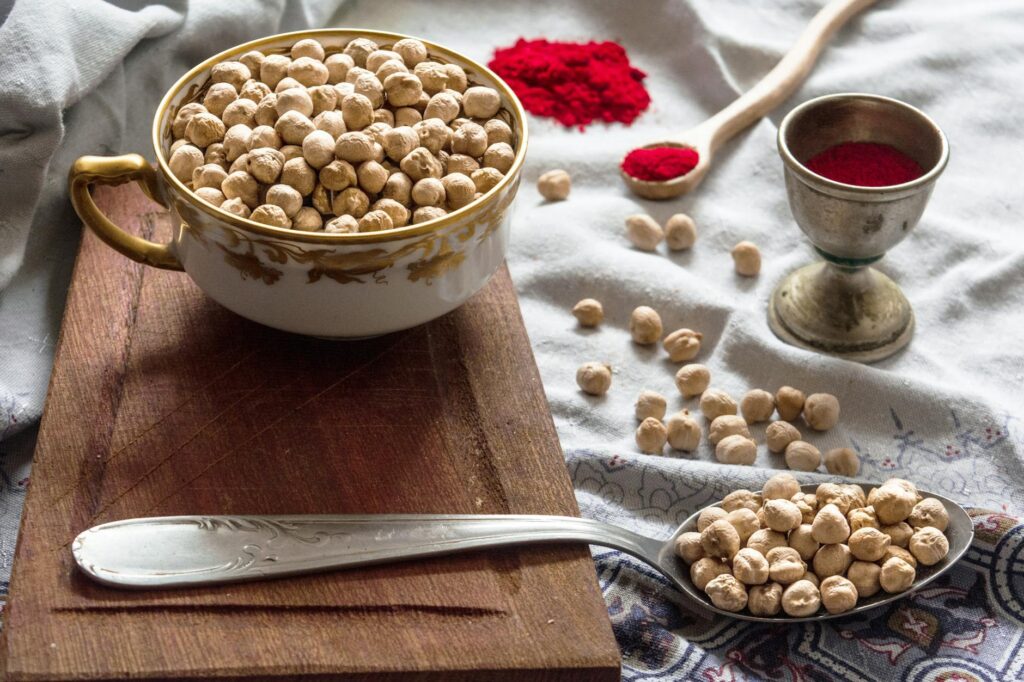
Chickpeas: Origins and Evolution
Introduction
Chickpeas, scientifically known as Cicer arietinum, are legumes that have gained immense popularity worldwide due to their nutritional benefits and versatile culinary applications. Often celebrated for their rich protein content, fiber, and essential vitamins and minerals, chickpeas have become a staple in numerous diets across various cultures. This article delves into the origins and evolution of chickpeas, exploring their historical significance, production methods, and contemporary uses.
What Is About?
Chickpeas are one of the oldest cultivated legumes, recognized for their distinctive round shape and nutty flavor. They vary in color, including beige, green, black, and red, and are commonly categorized into two main types: desi and kabuli. Desi chickpeas are smaller, darker, and have a rough coat, while kabuli chickpeas are larger, lighter, and smoother. Their nutritional profile, combined with their adaptability to different culinary traditions, makes them a significant ingredient in various cuisines, from Mediterranean to South Asian.
History and Origins
Chickpeas are believed to have originated in the Near East over 7,000 years ago. Archaeological evidence suggests that they were among the first crops domesticated by humans, with findings of chickpea remains in ancient sites such as Jericho in the Jordan Valley and in the city of Çatalhöyük in modern-day Turkey. The earliest known cultivation of chickpeas likely took place in the regions known today as Turkey, Syria, and Israel.
As they spread across continents, chickpeas became integral to various cultures. In ancient Greece and Rome, they were consumed as a staple food and were even used as a meat substitute. Their popularity continued to rise throughout the Middle Ages, especially in the Mediterranean region, where they became a key ingredient in numerous dishes. The introduction of chickpeas to the Americas occurred during the Columbian Exchange, where they were embraced in countries like Mexico and Peru, further enhancing their global presence.
Production and Processing
Today, chickpeas are cultivated in over 50 countries, with the largest producers being India, Australia, Turkey, and Pakistan. The cultivation of chickpeas is typically done in dryland farming systems, as they are well-suited to arid and semi-arid climates. They require minimal water compared to other crops, allowing them to thrive in regions where water scarcity is a concern.
Chickpeas are usually planted in the spring and harvested in late summer or early fall. The production process involves several stages, including planting, growing, harvesting, and post-harvest handling. After harvesting, the chickpeas undergo processing to remove any debris and to sort them based on size and quality. This processing is crucial to ensure that the chickpeas meet market standards.
Quality and Grading
Chickpeas are graded based on several criteria, including size, shape, color, and the absence of defects. The grading system helps ensure that consumers receive high-quality products. Generally, larger and smoother chickpeas (kabuli type) command higher prices than smaller, rougher varieties (desi type).
Quality control measures are essential throughout the supply chain, from seed selection to post-harvest processing. Standards set by organizations such as the USDA (United States Department of Agriculture) provide guidelines for grading and quality assurance, which helps maintain consistency in the market.
Buying Considerations
When purchasing chickpeas, consumers should consider several factors to ensure they select the best product for their needs. Here are some key considerations:
1. Type: Determine whether you need desi or kabuli chickpeas based on your culinary requirements. Kabuli chickpeas are often preferred for salads and hummus, while desi varieties are commonly used in curries and stews.
2. Packaging: Opt for well-packaged products that protect the chickpeas from moisture and pests. Look for packaging that includes clear labeling of the harvest date and expiration date.
3. Organic vs. Conventional: Organic chickpeas are cultivated without synthetic pesticides and fertilizers, making them a more environmentally friendly choice. However, they may be priced higher than conventional options.
4. Bulk vs. Packaged: Buying in bulk can be more economical, especially for frequent users. Ensure that bulk bins are well-maintained to prevent contamination.
5. Country of Origin: Some consumers may prefer chickpeas from specific countries known for their quality, such as those from the Mediterranean region or India.
Uses and Applications
Chickpeas are incredibly versatile and can be used in a wide array of dishes. In Mediterranean cuisine, they are often transformed into hummus, a creamy dip made by blending cooked chickpeas with tahini, olive oil, lemon juice, and garlic. In Indian cuisine, chickpeas are a key ingredient in dishes like chana masala and various curries.
In addition to savory applications, chickpeas can be used in salads, soups, and stews, and they can be roasted for a crunchy snack. Their flour, known as gram flour or besan, is widely used in gluten-free baking and cooking. Furthermore, chickpeas have gained traction as a meat substitute in vegetarian and vegan recipes, providing a source of protein that is both nutritious and satisfying.
Storage and Shelf Life
Proper storage is essential to maintain the quality and flavor of chickpeas. Dried chickpeas should be kept in an airtight container in a cool, dry place, where they can last for up to two years. Cooked chickpeas can be stored in the refrigerator for about 3 to 5 days or frozen for longer preservation, typically up to six months.
When it comes to canned chickpeas, they should be stored in a cool, dry location and consumed before the expiration date indicated on the can. Once opened, any unused canned chickpeas should be transferred to an airtight container and refrigerated, where they can be safely stored for several days.
Common Misconceptions
Despite their