
Rhubarb Production by Country
Introduction
Rhubarb, a unique perennial plant known for its tart flavor and vibrant stalks, has garnered attention in culinary applications worldwide. Often mistaken for a fruit, rhubarb is actually a vegetable that thrives in specific climates and soil conditions. This article delves into the production of rhubarb across different countries, exploring the regions that cultivate it, the historical context of its growth, and the factors influencing its quality and availability.
What Is Regions?
In the context of rhubarb production, “regions” refers to the geographical areas where rhubarb is cultivated. These regions vary significantly in climate, soil type, and farming practices, all of which directly impact the quality and yield of the crop. Understanding these regions provides insight into the global dynamics of rhubarb cultivation and consumption, as well as the agricultural practices that define each locale.
History and Origins
Rhubarb’s history dates back to ancient times, with its origins traced to Asia, particularly in the regions that are now China and Mongolia. Historically, the roots of rhubarb were valued for their medicinal properties, used in traditional Chinese medicine for centuries. By the 17th century, rhubarb made its way to Europe, where it gained popularity not only for its health benefits but also for its culinary potential.
The first notable cultivation in Europe occurred in the United Kingdom, where it adapted well to the cooler climate. Today, rhubarb is celebrated in many cultures, particularly in the northern hemisphere, where its tart flavor complements dessert dishes and savory preparations alike.
Production and Processing
Global Overview
Rhubarb is primarily produced in temperate regions, with significant cultivation seen in North America, Europe, and parts of Asia. The leading producers include:
- United States: Particularly in the states of California, Oregon, and Washington.
- United Kingdom: The Yorkshire region is famous for its “forced” rhubarb, grown in dark sheds to produce tender, sweeter stalks.
- China: A major producer, rhubarb is cultivated more for its medicinal roots than for culinary use.
- Canada: Particularly in Quebec and Ontario, rhubarb thrives in the cooler climate.
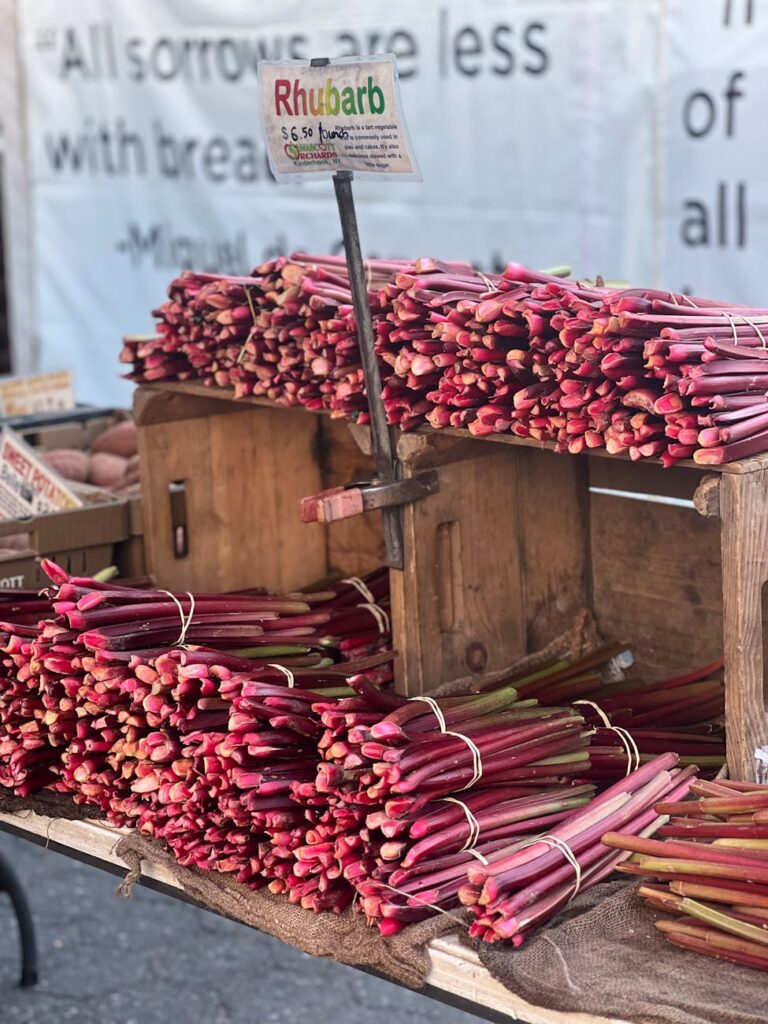
- Color: Bright red stalks are generally preferred, although green stalks can still be of good quality.
- Texture: Fresh rhubarb should be firm and crisp. Soft or wilted stalks indicate age or poor handling.
- Taste: The tartness of rhubarb can vary, and while some consumers prefer sweeter varieties, the traditional tart flavor is prized in many culinary applications.
- Desserts: Rhubarb is a popular filling for pies, crumbles, and tarts. Its tartness pairs well with strawberries, creating classic combinations.
- Preserves: Rhubarb can be cooked down into jams and jellies, often combined with other fruits for added sweetness.
- Savory Dishes: While less common, rhubarb can also be used in savory applications, such as sauces or paired with meats, where its acidity complements rich flavors.
- Rhubarb is a Fruit: Many people consider rhubarb a fruit due to its use in desserts. However, it is botanically classified as a vegetable.
- All Rhubarb is Edible
Cultivation Practices
Rhubarb is typically grown from crowns—pieces of the root system—and requires well-drained, fertile soil with a pH between 6.0 and 6.8. The plant prefers cool weather and can be harvested from early spring through late summer, with the peak season occurring in April and May.
In regions where rhubarb is forced, such as in Yorkshire, growers employ a unique method that involves covering the plants to inhibit sunlight, resulting in sweeter and more tender stalks. This practice has become iconic and is celebrated with festivals that highlight the unique flavor of forced rhubarb.
Processing
Once harvested, rhubarb is typically washed and trimmed before being packaged for sale. Processing can also involve freezing or canning, extending its shelf life and allowing for year-round availability. The quality of processed rhubarb can vary, with attention paid to maintaining color and flavor during these processes.
Quality and Grading
The quality of rhubarb is assessed based on several factors, including:
Grading standards may vary by country, but many producers adhere to guidelines set by agricultural authorities to ensure consistency and safety in the marketplace.
Buying Considerations
When purchasing rhubarb, consider the following factors:
1. Seasonality: Fresh rhubarb is typically available from late winter to early summer. Buying in season guarantees the best flavor and texture.
2. Source: Local farmers’ markets often provide the freshest options, while grocery stores may stock both local and imported varieties.
3. Appearance: Look for firm, vibrant stalks without blemishes or signs of wilting. Avoid stalks that are overly thick, as they may be more fibrous.
4. Organic vs. Conventional: Organic rhubarb is available and often preferred by consumers seeking pesticide-free options.
Uses and Applications
Rhubarb is primarily used in culinary applications, renowned for its tartness and ability to balance sweetness. Common uses include:
Storage and Shelf Life
Fresh rhubarb should be stored in the refrigerator, unwashed, wrapped in a damp paper towel and placed in a plastic bag. Under proper conditions, it can last for up to one week.
For longer storage, rhubarb can be blanched and frozen, maintaining quality for several months. It is advisable to slice rhubarb into manageable pieces before freezing to facilitate easier use later on.
Common Misconceptions
Despite its culinary prominence, several misconceptions about rhubarb persist: