
Romanesco: Origins and Evolution
Introduction
Romanesco, a striking member of the Brassica family, is renowned for its fractal-like structure and vibrant lime-green color. Often referred to as Romanesco broccoli or Roman cauliflower, it stands out not only for its visual appeal but also for its unique flavor and versatile culinary applications. This article delves into the origins and evolution of Romanesco, exploring its history, production, quality grading, and more.
What Is Romanesco?
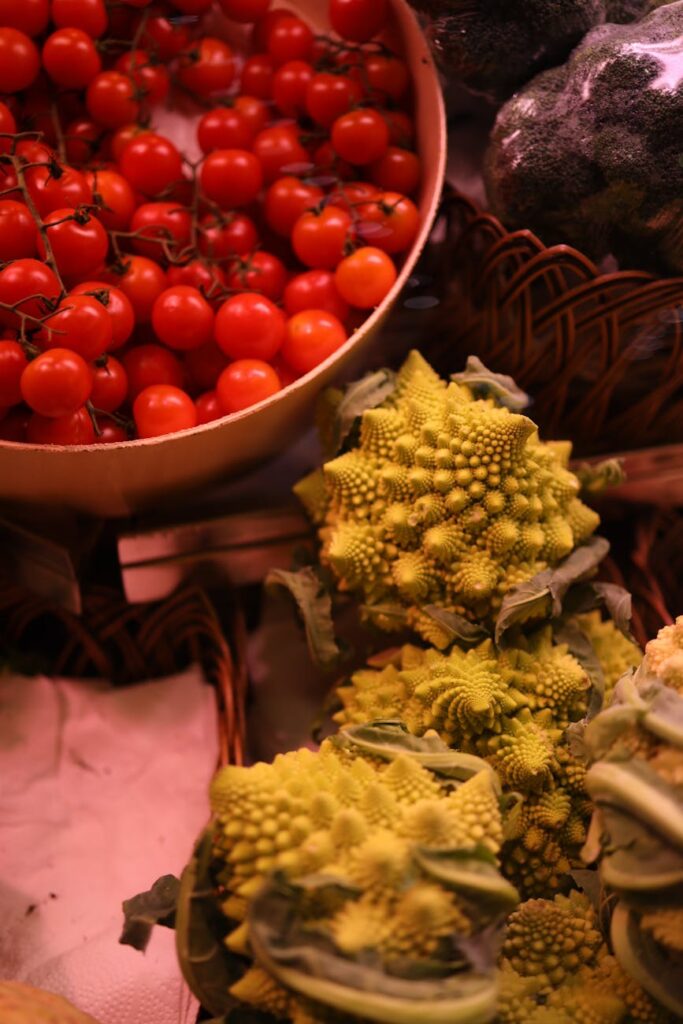
Romanesco is a vegetable belonging to the species Brassica oleracea, which includes other members like broccoli, cauliflower, and cabbage. It is characterized by its distinctive spiral-shaped florets and a compact, conical head. The texture is crisp and tender, with a flavor profile that is both nutty and slightly sweet, combining elements of cauliflower and broccoli. Romanesco is typically harvested when the heads are still tightly closed, ensuring optimal taste and texture.
History and Origins
Romanesco has a rich history rooted in Mediterranean cuisine, particularly in Italy. Its exact origins can be difficult to trace, but it is widely believed to have been cultivated in the regions of Italy, particularly around Rome, as early as the 16th century. The name “Romanesco” derives from its association with Rome, reflecting its deep cultural ties to the Italian culinary tradition.
The vegetable’s unique appearance, with its fractal geometry, has made it a symbol of both nature’s artistry and agricultural innovation. While it may have been largely overlooked for centuries, Romanesco gained popularity in the late 20th century, particularly among chefs and food enthusiasts eager to explore new textures and flavors.
Romanesco’s cultivation has expanded beyond Italy, with growers now producing it in various countries across Europe, North America, and Australia. This broader cultivation has facilitated its introduction into diverse culinary traditions, enhancing its global appeal.
Production and Processing
Romanesco thrives in temperate climates and is typically planted in early spring or late summer, depending on the growing region. It requires well-drained soil and consistent moisture to develop its characteristic shape and flavor. The plant is sensitive to temperature fluctuations; thus, it is most often grown in areas with moderate climates.
Harvesting Romanesco involves cutting the head from the stalk just above the leaves. This is usually done when the florets are still tightly packed, ensuring peak freshness. Once harvested, Romanesco is often cleaned, sorted, and packaged for distribution. The processing stage is crucial as it can affect the vegetable’s quality and shelf life. Typically, Romanesco is sold fresh, but it can also be found frozen or pickled in some markets.
Quality and Grading
Quality assessment of Romanesco revolves around several key factors, including size, color, firmness, and the tightness of the florets. High-quality Romanesco should have a vibrant green hue and a compact structure. The florets should be tightly closed, as this indicates freshness. Any signs of yellowing or wilting can suggest that the vegetable is past its prime.
Grading systems can vary by region, but generally, Romanesco is classified into different grades based on these quality indicators. Higher grades are typically reserved for those with superior visual appeal and structural integrity. In commercial settings, quality control measures are essential to ensure that only the best produce reaches consumers.
Buying Considerations
When purchasing Romanesco, it is important to consider its freshness and quality. Opt for heads that are firm, compact, and free from blemishes. The leaves should be vibrant and green, as this is often an indicator of freshness. If possible, buy from local farmers’ markets or reputable grocery stores that prioritize quality produce.
Seasonality is another important factor; Romanesco is typically in season from late summer to early winter. During this time, it is likely to be at its freshest and most flavorful. Additionally, consider the size of the head you are buying, as smaller heads tend to be more tender and flavorful, while larger ones may be tougher and more fibrous.
Uses and Applications
Romanesco is incredibly versatile in culinary applications. It can be steamed, roasted, sautéed, or eaten raw. Its unique shape makes it a stunning addition to vegetable platters, salads, and garnishes. The nutty flavor pairs well with a variety of ingredients, making it suitable for both savory and sweet dishes.
In gourmet cooking, Romanesco is often used in high-end restaurants to add visual impact to a dish. It can be pureed into soups, tossed in pasta, or incorporated into stir-fries. Each preparation method enhances its distinct taste and texture, allowing chefs to showcase Romanesco in innovative ways.
Beyond its culinary uses, Romanesco also holds a place in the world of food art. Its fractal geometry lends itself beautifully to decorative presentations, making it a favorite among chefs looking to create visually stunning dishes.
Storage and Shelf Life
To maintain its freshness, Romanesco should be stored in a cool, dry place. Ideally, it should be kept in the refrigerator in a perforated plastic bag to allow for air circulation while retaining moisture. Properly stored, fresh Romanesco can last for about a week.
If the vegetable begins to show signs of wilting or discoloration, it is best to consume it promptly. While some may choose to freeze Romanesco for longer storage, it is important to blanch the florets before freezing to preserve their color and nutrients. This process involves briefly boiling the vegetable and then immediately placing it in ice water to halt the cooking process.
Common Misconceptions
Despite its increasing popularity, several misconceptions about Romanesco persist. One common myth is that it is a hybrid between broccoli and cauliflower. While Romanesco shares characteristics with both, it is a distinct cultivar that belongs to the Brassica oleracea species.
Another misconception is that Romanesco is a difficult vegetable to prepare. In reality, its preparation is quite straightforward, and it can be cooked using various simple methods