
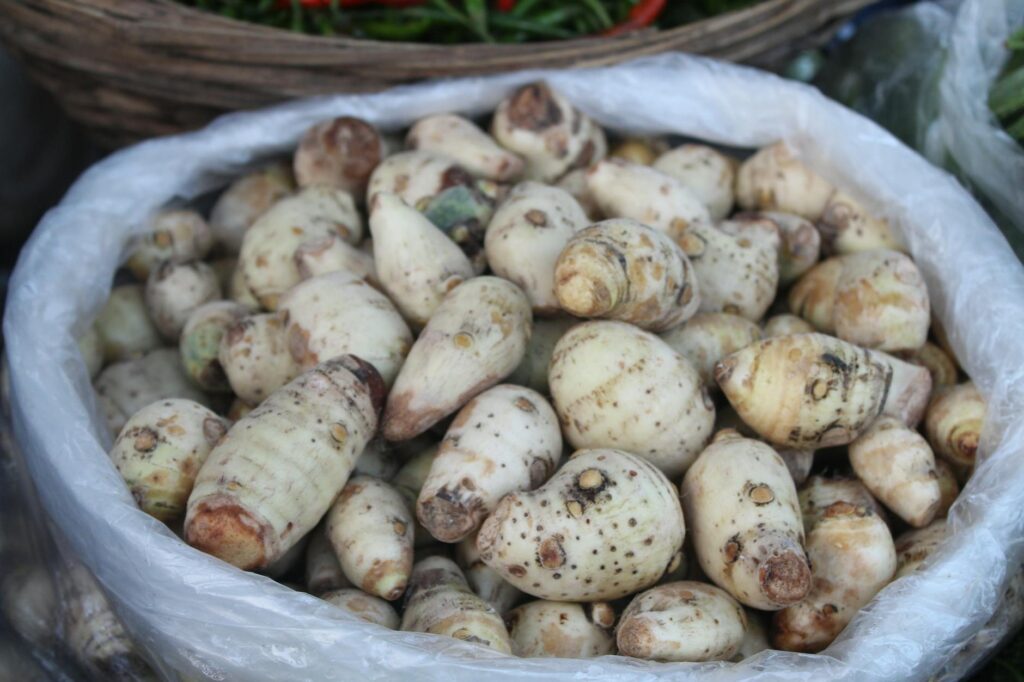
Taro: Origins and Evolution
Introduction
Taro, scientifically known as Colocasia esculenta, is a root vegetable that has long been a staple in various culinary traditions across the globe. Renowned for its starchy flesh and versatility, taro is not just a culinary ingredient but also a cultural symbol in many societies. With its unique flavor profile and nutritional benefits, understanding the origins, production, and uses of taro provides insight into its significant role in global gastronomy.
What Is Taro?
Taro is a tropical plant belonging to the family Araceae, which also includes other well-known plants like elephant ear and calla lily. The edible part of the plant is its corm, a bulbous underground stem that is rich in carbohydrates and dietary fiber. Taro can be distinguished by its heart-shaped leaves and thick, fibrous roots. Depending on the variety, taro can have a purple, white, or cream-colored interior.
Taro’s flavor is often described as nutty, with a slightly sweet undertone. When cooked, it has a creamy texture, making it an appealing ingredient for a wide range of dishes. Beyond its culinary attributes, taro is also a source of essential nutrients, including vitamins B and E, potassium, and magnesium.
History and Origins
Taro has a rich history that dates back thousands of years. It is believed to have originated in the regions of Southeast Asia and the Indian subcontinent, where it was initially cultivated for its edible corms. Archaeological evidence suggests that taro has been consumed since at least 1200 BCE, making it one of the oldest cultivated crops in the world.
From its origins, taro spread to various parts of the globe, primarily through trade and migration. By the time of the ancient Greeks and Romans, taro was already known and appreciated for its culinary uses. The plant made its way to Polynesia and the Pacific Islands, where it became a dietary staple and held significant cultural importance.
In many Pacific Island cultures, taro is not just food but a symbol of identity and heritage. It plays a crucial role in traditional ceremonies and celebrations, reflecting the deep-rooted connection between the plant and the people who cultivate it.
Production and Processing
Taro is primarily grown in tropical and subtropical regions, thriving in warm, humid climates. Major producers include countries like China, India, Nigeria, and the Philippines. Taro is typically cultivated in flooded fields or wetland conditions, mimicking its natural habitat.
The cultivation process involves planting corms in well-drained soil rich in organic matter. Taro plants require a substantial amount of water, especially during the growing season, which lasts about 7 to 12 months. Harvesting occurs when the corms reach a sufficient size, usually indicated by the yellowing of the leaves.
After harvesting, taro undergoes several processing steps. The corms are washed to remove soil, followed by peeling to eliminate the outer skin, which can contain irritants. The corms can then be boiled, steamed, or roasted, depending on culinary preferences. In some regions, taro is also processed into flour, chips, or even beverages.
Quality and Grading
The quality of taro is generally assessed based on its size, shape, and texture. High-quality taro corms are firm, free from blemishes, and have a smooth skin. Grading systems can vary by region, but generally, larger corms are considered more desirable due to their higher yield when cooked.
When purchasing taro, it is essential to select corms that feel heavy for their size, as this indicates moisture content and freshness. Avoid corms that exhibit signs of rot, mold, or excessive softness, as these may compromise the flavor and texture.
Buying Considerations
When buying taro, several factors should be considered to ensure quality and freshness. First, look for corms that are firm and heavy, as mentioned earlier. The skin should be free from blemishes, cuts, or soft spots.
It is also important to consider the variety of taro, as different types may have distinct flavors and textures. The two main varieties are the Bun Long and the Bun Taro, each with its unique characteristics. Researching local varieties can provide insights into which type may best suit specific culinary applications.
Purchasing taro from reputable sources, such as local farmers’ markets or specialty grocery stores, can increase the likelihood of obtaining high-quality products. Additionally, being mindful of the seasonality of taro can help in sourcing the freshest produce.
Uses and Applications
Taro is a versatile ingredient employed in various culinary applications worldwide. In Asian cuisines, it is often used in soups, stews, and desserts. In Hawaii, taro holds cultural significance and is transformed into poi, a traditional dish made by steaming and mashing the corms.
In addition to its savory applications, taro also lends itself well to sweet dishes. Taro can be used to make puddings, ice creams, and cakes, showcasing its adaptability in both sweet and savory contexts.
Moreover, the leaves of the taro plant are also edible and often used in dishes like laing in Filipino cuisine, where they are cooked with coconut milk and spices. This multifaceted ingredient highlights the plant’s culinary versatility.
Storage and Shelf Life
Proper storage is crucial for maintaining the quality of taro. Fresh corms should be kept in a cool, dry place, away from direct sunlight. Ideally, they should be stored in a well-ventilated area to prevent moisture buildup, which can lead to rot.
When stored under optimal conditions, taro can last for several weeks, although its shelf life may vary depending on the variety and harvesting conditions. Once cooked, taro should be refrigerated and consumed within a few