
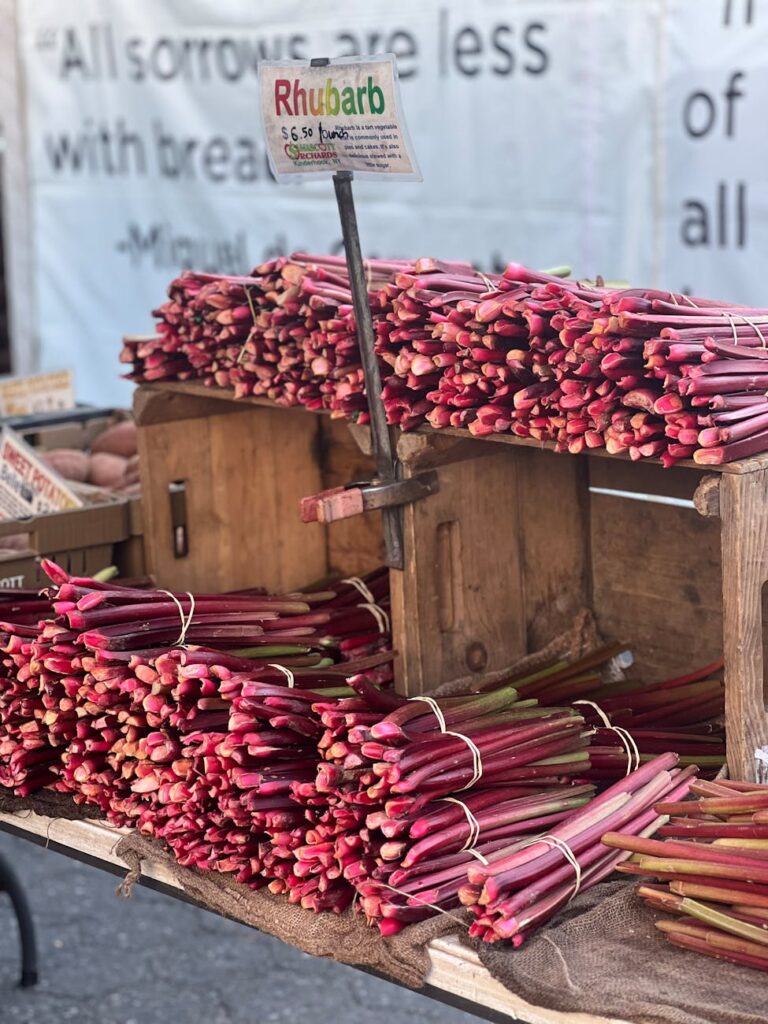
The History of Rhubarb
Introduction
Rhubarb, often recognized by its vibrant red stalks and tart flavor, is a unique and versatile ingredient in culinary traditions around the world. While many associate rhubarb primarily with desserts, its history is rich and complex, spanning various cultures and applications. This article delves into the fascinating journey of rhubarb, tracing its origins, production, and uses, as well as addressing common misconceptions and practical considerations for those interested in this remarkable plant.
What Is Rhubarb?
Rhubarb is a perennial vegetable, scientifically classified as Rheum rhabarbarum. Although commonly treated as a fruit in the culinary world, it is botanically a vegetable. The edible part of the rhubarb plant consists of its thick, fleshy petioles, which can range in color from deep red to green. The leaves, however, are toxic and should never be consumed. Rhubarb’s tart flavor profile makes it a popular choice for pies, jellies, and sauces, but it also has a long history of use in medicinal applications.
History and Origins
Rhubarb has a storied past that dates back thousands of years. Its origins can be traced to Central Asia, particularly the regions of China and Tibet. The earliest recorded uses of rhubarb date back to around 2700 BCE, where it was referenced in ancient Chinese texts for its medicinal properties. The Chinese valued rhubarb not only as a culinary ingredient but also for its purported ability to treat ailments such as constipation and inflammation.
By the 1st century CE, rhubarb began to spread westward through trade routes, reaching the Middle East and eventually Europe. The Greeks and Romans recognized its medicinal qualities, using it for various treatments. However, it was not until the 16th century that rhubarb gained culinary popularity in Europe. During this time, the plant was primarily cultivated for its roots, which were believed to possess more potent medicinal properties than the stalks.
The plant’s introduction to Europe is attributed to explorers who returned with it from the East, particularly from the Silk Road. By the late 18th century, rhubarb had become a staple in English gardens, often referred to as “pie plant” due to its use in desserts. The first recorded recipe for rhubarb pie appeared in the early 19th century, marking its transition from medicinal to culinary focus.
In North America, rhubarb was brought over by European settlers in the 17th century. It thrived in the cooler climates of the northern states and quickly became a popular ingredient in American cooking, particularly in the Midwest. Today, it is celebrated not just for its historical roots but also for its role in contemporary cuisine.
Production and Processing
Rhubarb is primarily cultivated in regions with a temperate climate, as it requires a distinct winter chill to thrive. Major producers include the United States, Canada, and certain European countries such as the United Kingdom and Poland. The plant is typically planted in the spring, and its stalks can be harvested starting in the second year of growth.
Harvesting involves carefully cutting the stalks from the plant, ensuring that the crown remains intact to allow for future growth. Once harvested, rhubarb is often trimmed, washed, and packaged for distribution. Fresh rhubarb is usually available from late spring to early summer, with peak season occurring in May and June.
Processing rhubarb can involve blanching, freezing, or canning, which helps to preserve its vibrant color and tart flavor. Frozen rhubarb retains much of its nutritional value and can be used in cooking and baking throughout the year. Canned rhubarb, often prepared in syrup, is also available, though it may contain added sugars.
Quality and Grading
When selecting rhubarb, quality is paramount. High-quality rhubarb should have firm, crisp stalks with a vibrant color, whether red or green. The stalks should be free of blemishes or signs of decay. Freshness is indicated by their crispness; wilted or soft stalks are a sign of age and diminished quality.
In the marketplace, rhubarb is typically graded based on size, color, and overall appearance. Larger stalks are often preferred for culinary uses due to their more substantial size, but smaller stalks can be just as flavorful. The grading system may vary by region, but generally, the best quality rhubarb will have a bright hue and a firm texture.
Buying Considerations
When purchasing rhubarb, whether from a grocery store or a farmers’ market, there are several factors to consider:
1. Seasonality: Fresh rhubarb is best bought in spring and early summer. Out-of-season rhubarb may be available but could be less flavorful.
2. Local Sourcing: Whenever possible, opt for locally sourced rhubarb. Local produce is often fresher and has a better flavor profile compared to imported varieties.
3. Organic vs. Conventional: Consider whether you prefer organic rhubarb, which is grown without synthetic pesticides or fertilizers. While organic options may be more expensive, they can be more sustainable and environmentally friendly.
4. Storage Needs: If you plan to store rhubarb for later use, check for any signs of damage or decay, as this can affect its shelf life.
5. Appearance: Look for bright, vibrant colors and firm stalks. Avoid any that appear limp or have dark spots.
Uses and Applications
Rhubarb’s versatility extends beyond its traditional role in desserts. Here are some of the various applications:
1. Culinary Uses: Rhubarb is most commonly used in pies, crumbles, and jams due to its tartness, which balances well with sweetness. It can also be stewed or used in sauces to accompany meat dishes.
2.